 Confidential
PREPARED FOR TGC GROUP · CONFIDENTIAL
A story built to carry when you're not in the room.
TGC Group develops, builds and manages its own hotels, a model very few firms can claim. This proposal sets out how we'd put that story on the page: interviews with the people behind it, a site structure that mirrors how you work, and a fast new build that owners, investors and brand partners can trust at a glance.
You told us more in five minutes than the website does.
Our call started with a Google listing problem, and we'll come back to that. But the more you talked about how TGC works, the clearer it became that the bigger gap sits somewhere else. Here's what we heard, mostly in your own words.
Four things from our conversation
One company, every stage.
"We develop, we are the general contractor, we build our own properties and we manage them." Every division earns on the same deal instead of sharing a third of it with an outside firm. It's an unusual model, and it's the first thing a visitor should understand.
The sale is trust.
When an owner hands TGC a property, you said they're trusting you with something like "$20 million to go take care of their property." They aren't hiring one manager. They're meeting a team of around a dozen people, from accounting to revenue to sales, and they want to know who those people are.
The website's job is confirmation.
"Our website is just confirming who we are." You aren't trying to sell rooms or generate leads from the site. Owners, investors, brand partners and future hires find you through relationships and LinkedIn, then check the website to see if the company matches the conversation.
A company with somewhere to go.
You described a goal everyone is working toward together and a company that celebrates, gives back and shows up for its communities. That energy came through clearly on the call. Right now it doesn't come through online.
"Can your story carry when you're not in the room? Today, the website can't carry it for you."
A finished business on an unfinished website.
Before the call we ran a full crawl of tgcgroup.net, pulled search data from Semrush, tested speed with Google PageSpeed Insights, and checked the results by hand in a browser. Everything below was measured on 8 October 2026.
189
ORGANIC VISITS A MONTH
63
SEARCH TERMS YOU RANK FOR
15.6s
HOMEPAGE LOAD ON A PHONE
Firms with a similar model, same measures
| Company | Ranking terms | Monthly organic visits |
|---|---|---|
| TGC Group | 63 | 189 |
| Midas Hospitality | 926 | 1,875 |
| Hotel Equities | 1,119 | 2,497 |
| Charlestowne Hotels | 242 | 1,727 |
| Commonwealth Hotels | 336 | 838 |
Source: Semrush US database, 8 October 2026. Semrush figures are estimates; we use them for scale rather than precision.
Six findings
The story isn't on the page.
Development, investment, construction, management and your hotel portfolio come to 886 words between them. The homepage carries 136 words, and its headline is "TGC Group is guided by three core principles." A developer or owner deciding who to trust learns very little about what you actually do.
Google can't tell what you do.
Ask Semrush which sites are closest to yours and it returns companies that happen to share the letters TGC. Most of what you rank for is other firms' names. Almost all of your search traffic comes from people who already typed "TGC Group."
Your hometown search is on page two.
"Hotel management Wichita" is your city and your exact business, and in Semrush's index you sit on page two. Across the terms that describe what you do, from hotel construction company to hotel asset management, there are roughly 5,000 searches a month and TGC appears on almost none of them.
Fifteen seconds to load on a phone.
Google's threshold for a good load is 2.5 seconds and for a poor one is 4. Your homepage's main content takes 15.6 seconds on mobile, because the page weighs 16.9 MB. Most visitors are gone long before it appears. You can check this yourself at pagespeed.web.dev.
The team is there, but hard to meet.
Thirty-nine headshots appear with no names until you hover. Every standalone bio URL carries Nick Esterline's name whoever it's about, about half of the 40 we tested return a 404, and Google still shows some of the dead ones in results. You've already spotted this one. It matters because the team is the thing owners most want to see.
Your proof only reaches people who already know you.
The Construction page lists real projects, but there's no page for hotel management, hotel construction or development as services, nothing for your commercial construction work, and a decade of news sits up to seventeen clicks deep where Google treats it as unimportant.
"None of this is a list of small fixes. It's what a website looks like when the business outgrew it."
Storytellers first. Builders second. One team throughout.
Digital Ink started in 2010 as a publishing company, and we still publish today. Our sister company, BOSS Publishing, produces business to business magazines read by around 400,000 people across the United States, roughly 100,000 of them in construction, with coverage that runs through hospitality, manufacturing, retail and supply chain.
That's where our agency was born. Companies we featured kept asking us to write their website copy, then to design the site, then to build it. Today we're a team of around 30 people across the country doing exactly that, but the habit from publishing never left: we interview people, find the story, and write it so a reader understands it in a minute.
Three reasons this fits
We interview, we don't fill templates.
The people who sit down with Nick Esterline and your division leads are writers and editors who report on business every day. They know how to draw out the story behind a groundbreaking or a turnaround, and how to write it for an owner, not for a search engine.
We know construction and B2B buyers.
We've built sites and marketing for one of the largest concrete contractors in the country, a 3D concrete printing firm and a steel building components manufacturer. Developers, owners and investors read differently from consumers, and we write for them.
We start with the problem you brought us.
You called about your Google listing, so that's where we started, with practical steps you can take now. From there, the same small team handles strategy, writing, design, development and hosting, so nothing gets lost in a handoff and you never have to manage us.
Builders who needed their story told.
Each project below links to a full case study describing what the client needed, how we approached it and what we delivered.
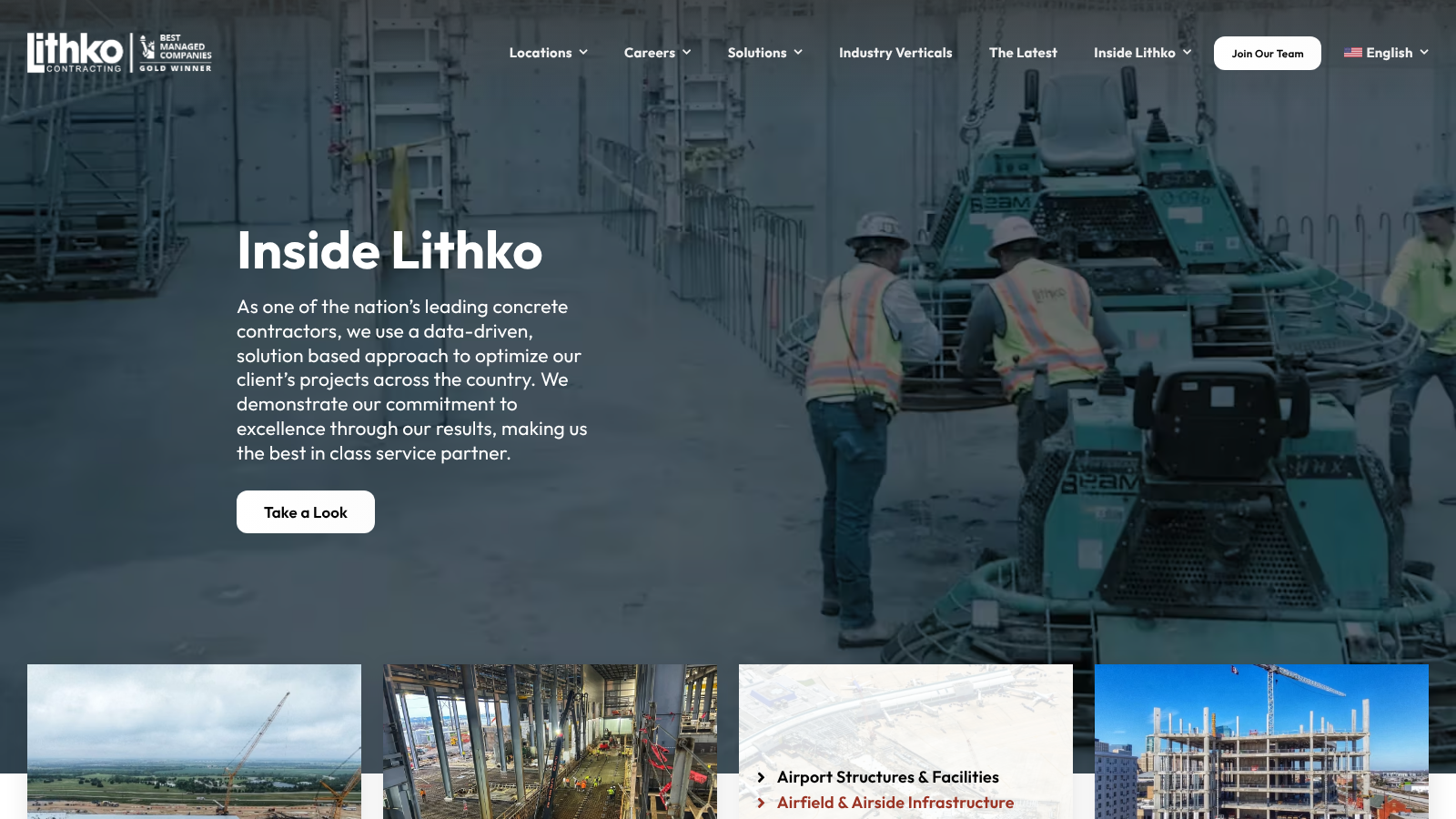
Lithko Contracting Case Study
A national concrete contractor with more than 6,000 employees and a website that didn't explain its services or show the culture of its local offices. We rebuilt the site around clear service explanations, recruiting and local culture, redesigned its collateral, and now host and maintain it.
Why this matters for TGC
A large construction business with many teams and locations, presented as one company people want to work with and work for.
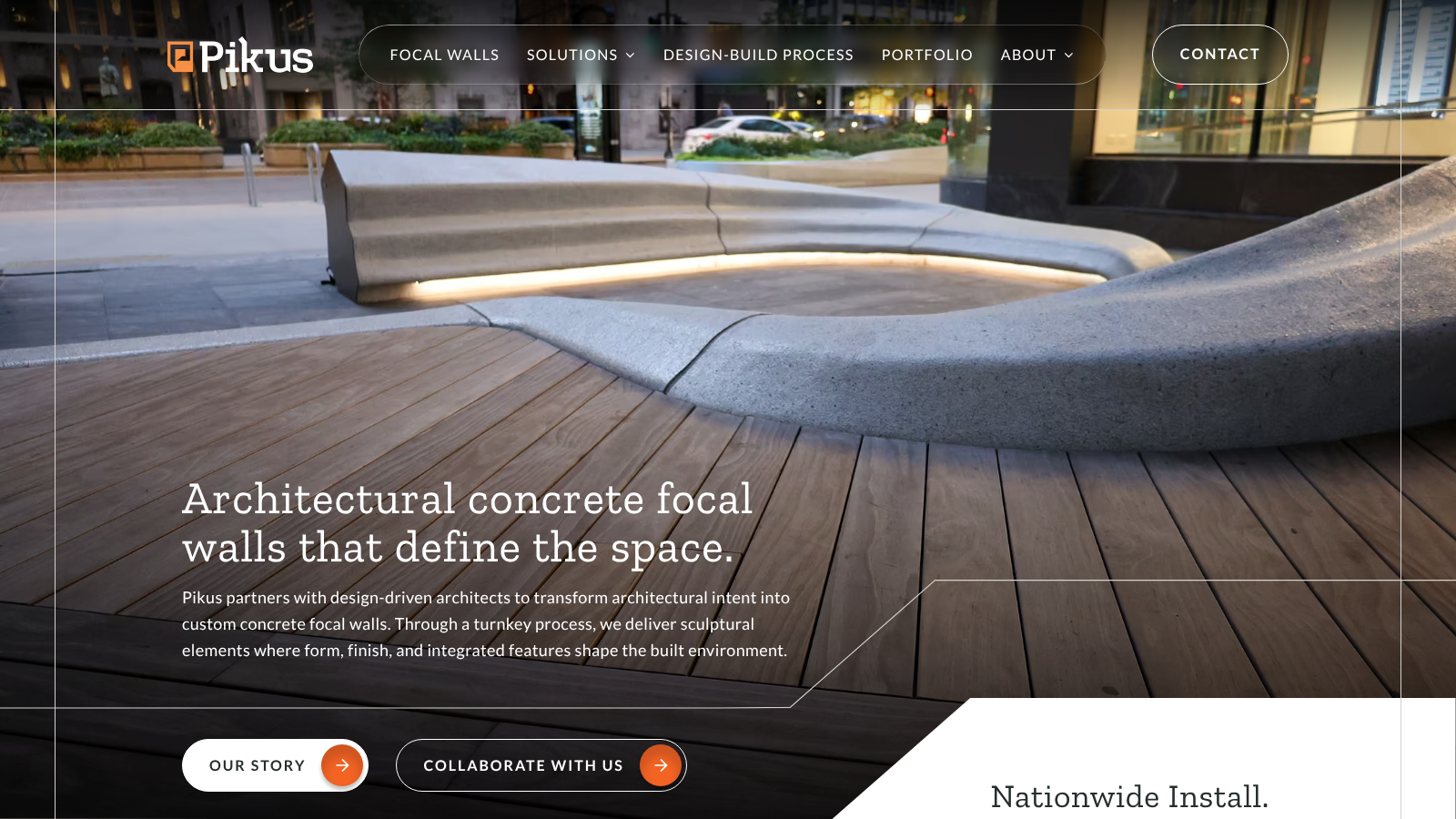
Pikus Case Study
A 3D concrete printing company whose old website no longer reflected its premium positioning. We led the strategy, information architecture, design and WordPress build, with a project portfolio structured so the team can keep adding work as it's delivered.
Why this matters for TGC
Projects as proof. A portfolio built to grow with every completed job, the way your hotels and construction work should.
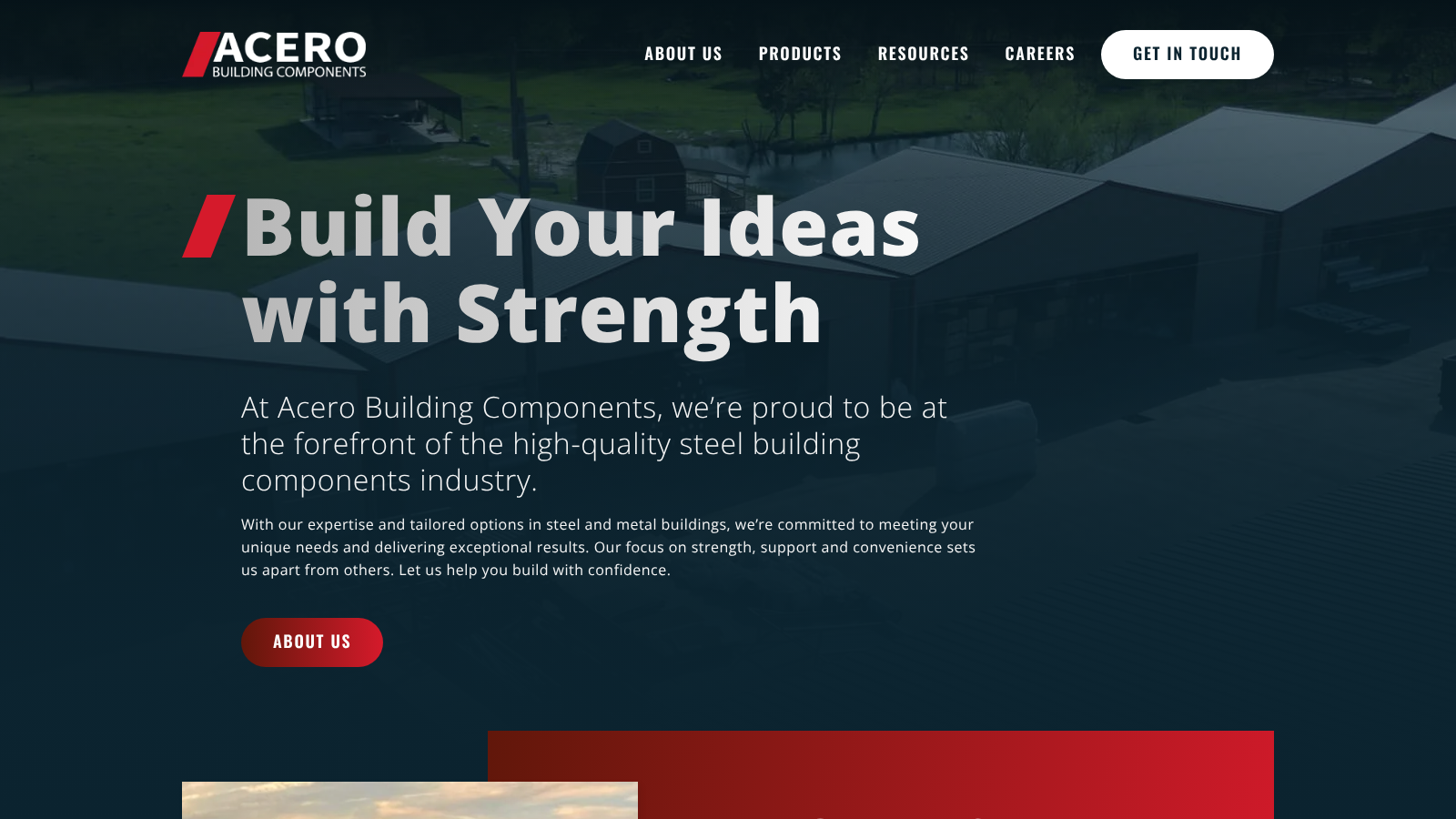
Acero Building Components Case Study
A steel building components company with a text heavy site that was hard to navigate. We started with leadership interviews, then wrote every page, built the SEO into the structure from titles to alt text, optimized the photography, migrated the old URLs and launched with zero downtime.
Why this matters for TGC
Nearly the same path we're recommending for you: interviews first, then copy, then a fast, search ready build.
Ground to guest, the way you'd build a hotel.
You wouldn't open a hotel without a site plan, a solid frame and someone to run it once the doors open. We'd approach your website the same way. Our full recommendation runs in four phases plus ongoing hosting, and you approve each phase before the next begins.
Discovery and Planning
The outcome: a clear picture of who TGC is, who the site is for, and what it needs to do.
We start with the people. A few recorded interviews with the team, yourself and the leads for development, construction, management and investment, so the story comes from the people who built it. Alongside the interviews, we review what's already there worth keeping, from your project list to a decade of news, and research the search terms owners, developers and partners actually use.
Includes
- Stakeholder interviews
- Goals and audience definition
- Review of existing content worth keeping
- SEO keyword research and plan
- Technical review of the current site
About three and a half months from first interview to launch.
This timeline assumes interviews can be scheduled in the first few weeks. Phases overlap where they safely can, so the sitemap starts taking shape while the messaging is being finalized.
Weeks 1 to 3
Phase 01 · Discovery and Planning
Interviews, content review and keyword plan.
Weeks 3 to 5
Phase 02 · Branding and Messaging
Positioning, narrative and audience messaging.
Weeks 5 to 12
Phase 03 · Sitemap and Design
Sitemap, copy, case studies and Figma design approval.
Weeks 10 to 14
Phase 04 · Development and Launch
Build, review and launch.
From launch
Hosting and Maintenance
Monthly, ongoing.
The exact schedule is set in the Statement of Work and depends on interview availability and approval turnaround.
We'd rather get the number right than get it fast.
We haven't put a price on this page, and that's deliberate. A website like this depends on decisions only you and Nick can make: how many divisions and brands get their own pages, how many projects become case studies, how much of your existing content is worth carrying forward, and how quickly you want to move. Pricing it before those conversations would mean guessing, and you'd be right not to trust a guess.
So the next step is a conversation, not a contract. We'll walk through the plan with you, agree what belongs in the first release and what can wait, and then put together an accurate quote for each phase that reflects what TGC actually needs.
How we work when we get there
One phase at a time.
Each phase is scoped and approved on its own. You can start with Discovery and Planning and decide on the rest once you've seen how we work.
Billed on tracked time.
We work against an agreed ceiling for each phase, and you only pay for the hours we actually use. Estimates are for planning; invoices reflect reality.
No surprises.
Nothing goes past an agreed ceiling without your written approval, and every invoice comes with a detailed time log.
A smaller first step to keep you moving.
The rebuild above is our honest recommendation, because it's the only way to tell TGC's story properly. But we understand budgets and timing, and a project this size may belong in next year's plan rather than this one.
If that's the case, there's real value in fixing what's actively working against you on the current site. It won't tell your story, and we won't pretend it does. It will stop the website from slowing you down, clean up what Google sees, and give us both a low-risk way to see how we work together before anything bigger is on the table.
Some of this has been sitting there a long time.
The site's own records show how long. A duplicate homepage was published in March 2024 and hasn't been edited since. Alongside it sit an older homepage still titled "Old Hom" and two more leftover pages, all four live, all four listed in the sitemap your site hands to Google, and every one of them linking visitors to an unfinished staging version of the site. The team bio addresses were created in January and February 2024 under the founder's name and haven't been touched since.
We understand your current web partner is now working on some of these, which is good news. But none of them should have been there in the first place, and none of them should have needed you to find them. That's the difference a proactive partner makes, and it's why we recommend pairing these fixes with our hosting and maintenance plan below.
What we'd fix, and why it matters
TECHNICAL
Your homepage takes over 15 seconds to load on a phone.
Google's benchmark for a good load is 2.5 seconds, and most visitors leave long before 15. Compressing the images and removing unused code brings the page weight down so people actually see it, and faster sites rank higher.
The site sends no security headers.
These are standard instructions that tell browsers how to protect a site and its visitors from common attacks. Adding them is quick and closes a basic gap.
A decade of news is buried up to 17 clicks deep.
Google treats pages that deep as unimportant, so your announcements, groundbreakings and awards are effectively hidden. Better archive links make that history easy to find.
Google can't confirm who TGC is.
There's no structured data on the site telling Google your company name, address and what you do. Adding it supports your Google Business Profile and how you appear in search.
Dead links and outdated code.
Thirty links point to pages that no longer exist, and older link code undercuts the site's secure connection. Cleaning them up stops the site from looking neglected.
A duplicate homepage and three leftover pages are live.
All four are listed in the sitemap Google reads and link visitors to an unfinished staging site, which confuses Google about which homepage is real. (Your current provider is fixing this.)
Team bio addresses carry the founder's name, and about half no longer work.
Google is still showing some of the dead pages in results, so people searching for your team land on errors. (Your current provider is fixing this.)
ON-SITE
Your key pages have no main heading or search description.
The homepage and every service page are missing the two things Google relies on most to understand a page. Writing them properly is the foundation for being found for what you do.
Nine in ten images have no description.
Without alt text, Google can't read your images and screen readers can't describe them. Adding descriptions helps both search and accessibility.
Details that have drifted.
An outdated job title, a project listed in the wrong state and a misspelled city name are small things, but they're exactly what owners and partners notice.
$3,080 to $4,480 at $140 an hour, billed on tracked time. You only pay for the hours we actually use.
Estimates are based on our review of tgcgroup.net in October 2026. Work is done on your current site, with your web partner's cooperation where access is needed.
KEEPING IT THAT WAY
Hosting and maintenance that looks after the site for you
Fixing these issues once only helps if someone keeps watching. On our hosting and maintenance plan, your site runs on managed Google Cloud servers with a CDN for speed, a web application firewall, daily backups, regular theme and plugin updates, and ongoing monitoring by a team that knows your site. If something needs attention, you hear it from us first. You can view all of the details on our Hosting and Maintenance Package here: H&M Package
Every new hotel brings new people checking you out.
Your own history page names the goal: 50 by Fifty. Your hotel list shows four more properties opening this winter. Every one of them brings new owners, lenders, brand partners and hires, and most will look at your website before they ever meet your team.
Signed in the coming months, interviews can start as soon as you are ready and the new site can be live by early next year. That means the next wave of openings, and the next owners you meet, see the company you actually are.
- Approve the plan
- DISCOVERY GETS STARTED
- MESSAGING,SITEMAP,DESIGN
- LAUNCH BY Q1
- Hosting and maintenance from launch
"The next owner will meet your website before they meet your team."
Take the time you need with this.
- 01
Share it with your executive team.
This is built to be read without us in the room. Take whatever time you need, and come back to us with questions whenever they come up.
- 02
Tell us where your appetite is.
The full rebuild, the short-term fixes, or the fixes now with the rebuild planned for later. Any of the three is a sensible place to start.
- 03
Refine the options together.
If a new website is a possibility, we'll book a follow-up call to work through the details with you: page count, case studies, what belongs in the first release and what can wait. From there we'll come back with an accurate quote for each phase.
Prepared by Digital Ink